

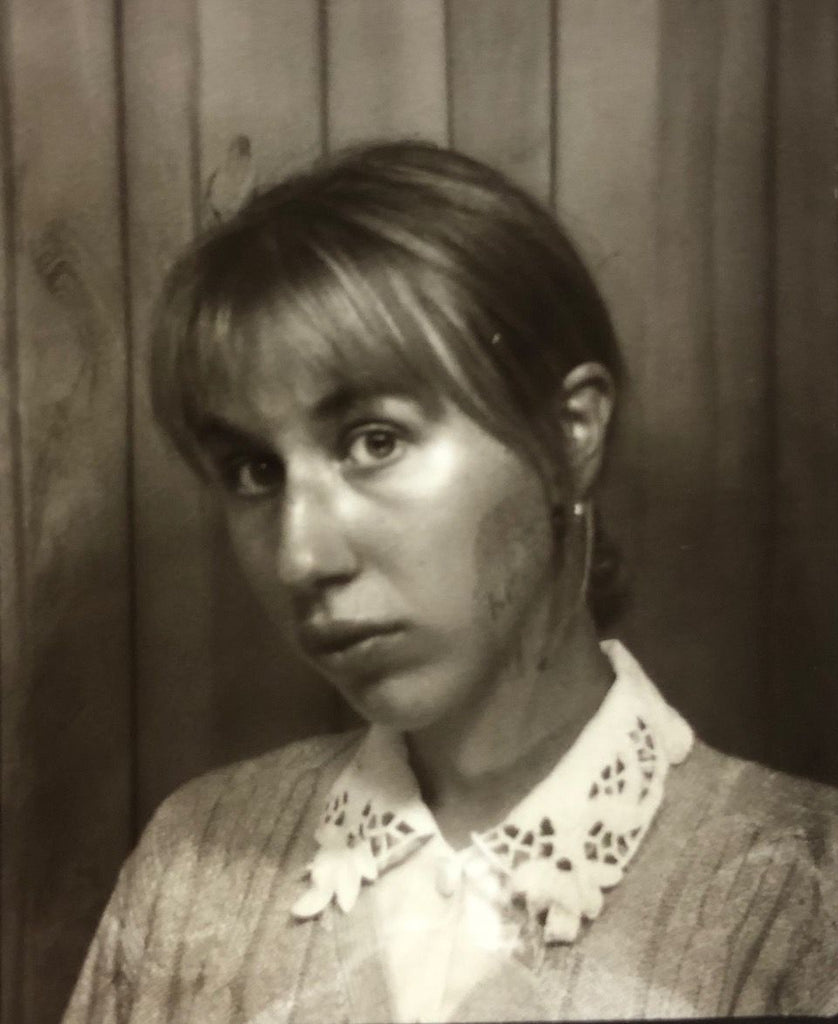
Ola Lewczyk works primarily with beeswax, clay and biomaterials. Focusing on the process of making, she’s drawn to craft practices, slavic folklore and building companionships with non-human substance. She continuously moves between the grounding and the intangible; for her personal symbolism is a medium and touch is a portal.
Group

Wax from a grandfather's hives, finished by fire

The beeswax comes from one source: the hives kept by Ola Lewczyk's grandfather in the Polish countryside, and only the residue left after the seasonal honey harvest. Nothing is added to it. The artist dips and models the wax by hand, without a mould, and considers the object unfinished until it is lit. Wicks are set inside the mass rather than down a single axis, so as the candle burns, new flames open up where the wax recedes. The buyer completes the work.

The titles are numbers because each candle is a single work, not a model. Candle 028 and Candle 036 differ in mass, surface and silhouette, the way two hand-built pots do. On a dining table or a mantelpiece they stand as small sculptures and only secondarily as light; once lit, they change shape by the hour and are gone within weeks. The Oblist lists them among its candles and candle holders, where they are the only ones made to be used up.

Ola Lewczyk works with beeswax, clay and biomaterials, and describes touch as a portal and personal symbolism as a medium. The references are Slavic folklore and the craft practices of Eastern Europe. In 2023, at the Narva Art Residency in Estonia, she took the ceramic techniques of the Neolithic Narva culture as a starting point: mud lifted from the ground, worked collectively into vessels to eat from, fired in a kiln she built herself. The candles belong to the same line of thought, a raw material handled with the oldest gestures available, and they sit alongside the gallery's sculpture and collectibles by independent artists.

Ola Lewczyk produces in small numbers, and new candles are listed as they are made; each page gives the dimensions, the material and the number of the work. Interior designers and architects who want these candles in a private home, a dining room or a hotel can ask about quantities and availability through the Trade Program.