

Léa Bigot is an artist, sculptor, and designer from Reunion Island, now based in Marseille, France, works primarily with ceramics. Her creations explore emotional depth, aiming to evoke shared feelings through abstract forms inspired by the natural world. Drawing from the black cliffs of her native island and the bright creeks of Marseille, her work captures the movement of life—a storm’s energy, the moment before a wave crashes—expressing vitality without resembling anything figurative.

Group

Burnt oak over carved stoneware

The Lac dining table puts two slow processes on top of each other. Below, supports in white stoneware, sculpted by hand. Above, a top of solid oak that has been carved, stained, burnt and brushed in turn, so the grain stands up under the hand. Ceramic at the scale of a dining table is rare; ceramic carrying a charred oak slab is rarer. Lac is the largest of the five pieces by Lea Bigot at The Oblist and the one that reads most plainly as a sculpture that happens to seat people.

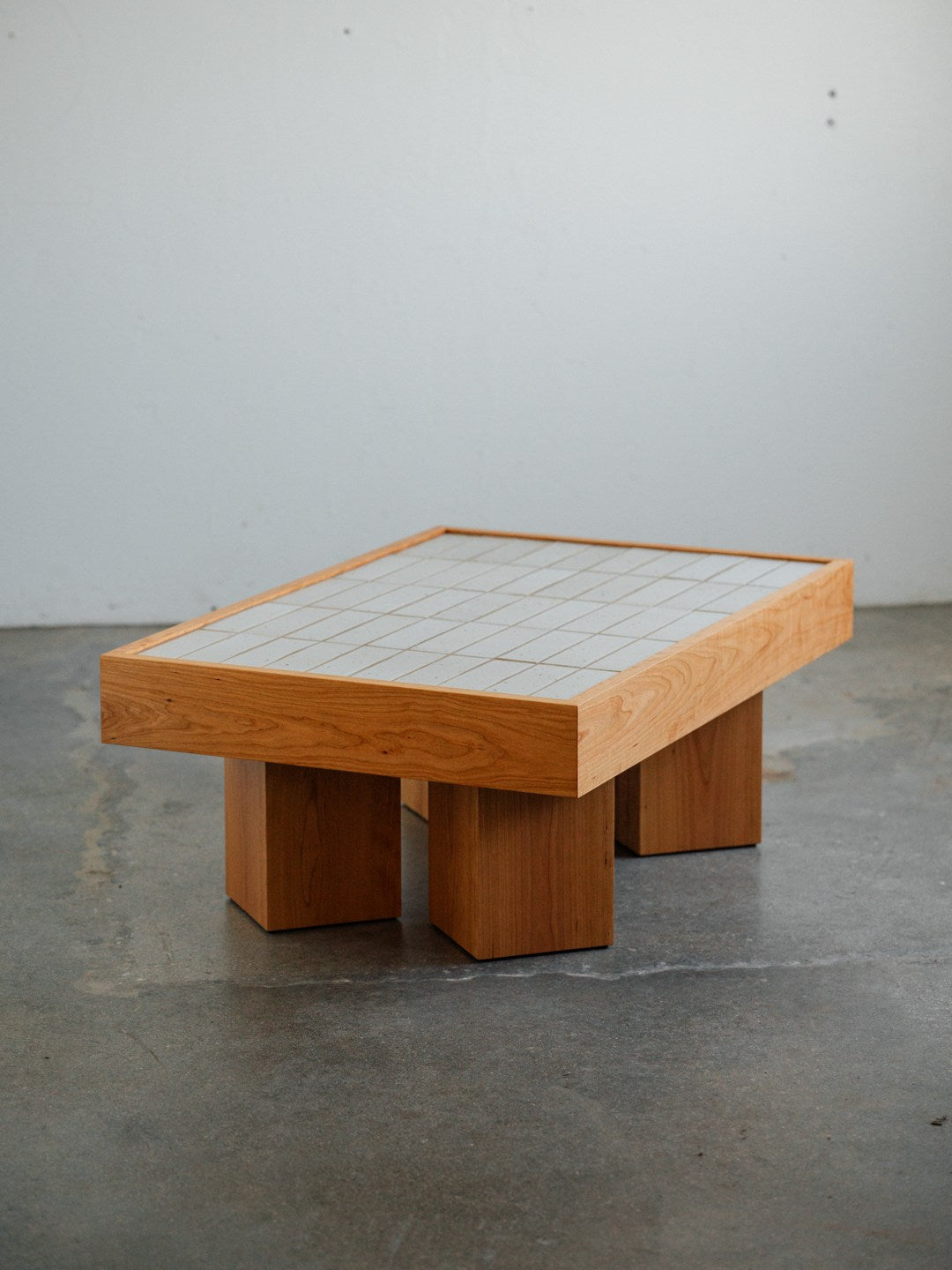
The coffee tables use a simpler device. Rivage: two sculpted white stoneware modules, a thermoformed glass top laid across them, nothing hidden. Baisers Volés, stolen kisses, repeats the pair, but the two carved forms lean toward each other and the title does the rest. The forms are abstract. Lea Bigot grew up on Reunion Island and now works in Marseille, and what she cites are the black cliffs of the one and the bright creeks of the other, the energy of a storm, the second before a wave breaks. None of that is depicted; it is in the mass and the surface. Both tables are listed with the sculptural coffee tables at The Oblist, for a living room that takes one strong object rather than a matching set.

Coquille, a table lamp, is a rounded sculpted form in raw white stoneware left unglazed, so the light picks up the grain of the clay instead of bouncing off a glaze. It is scaled for a bedside or a desk. The Coquille lamp and the Signe floor lamp, a sculpted stoneware module at the base under a metal and fabric shade that has been dyed and waxed, carry the tables' material into ceramic lighting. All of it is made by hand, which means two Coquille lamps will not match exactly in profile or surface.

Five pieces, listed with their materials, by an artist, sculptor and designer who treats furniture as a format for sculpture. Interior designers placing a Lea Bigot table in a residential or hotel project request it through the Trade Program.