Vintage Ashtrays: Rare Designer Pieces from the 1920s to the 1980s

231 products

The ashtray is one of the most under-appreciated categories in 20th-century decorative arts. For sixty years — roughly from 1920 to 1980 — every major designer, glassmaker and silversmith produced ashtrays. They were the small format on which great artists tested their vocabulary. Carlo Scarpa designed ashtrays. So did Gio Ponti, Tapio Wirkkala, Marianne Brandt and Ettore Sottsass. The ashtray was a quiet stage for design experiment, and the surviving pieces — particularly in Murano glass, in solid brass, in silver-plate or in cut crystal — are among the most collectible decorative objects of the period.

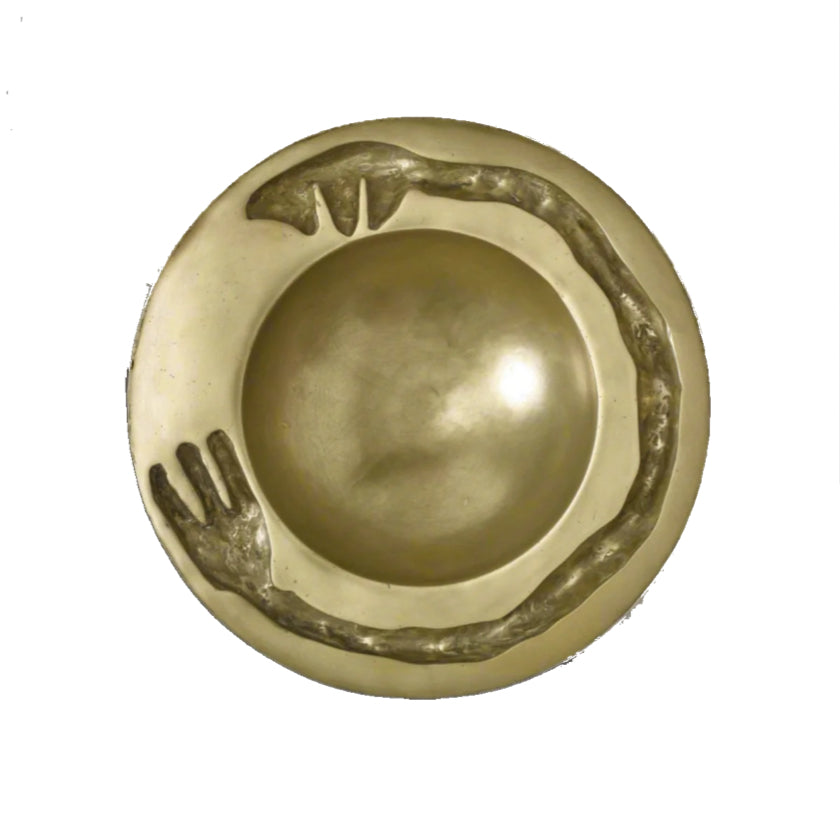
This gallery curates vintage and antique ashtrays sourced from across Europe — Murano glass pieces from the Italian masters, brutalist brass pieces from 1960s France and Italy, Bauhaus pieces by Marianne Brandt, mid-century crystal pieces from Bohemia, and rarer designer signed editions. We acquire most pieces from estates and private collections, and we document the maker, period and country of origin for each piece.

A vintage ashtray today functions as a small sculpture, a catch-all for a console table, a paperweight on a desk. It is one of the most affordable ways to collect serious 20th-century design — many pieces in this gallery start at €120 — and one of the most rewarding, because the best ashtrays carry the entire decorative vocabulary of their period compressed into a single object.
Show Filter
Group

The Enduring Appeal of Vintage Ashtrays in Collectible Design

Vintage ashtrays have evolved far beyond their original utilitarian purpose. Today, they are collected as sculptural design objects, decorative catch-all dishes and miniature works of decorative art. At The Oblist, our curated selection of vintage and modern ashtrays focuses on rare and visually distinctive pieces chosen for their craftsmanship, material richness and historical significance.

From Murano glass creations to brutalist bronze compositions and postmodern Memphis-inspired objects, vintage ashtrays reflect the artistic language of their respective periods. Their appeal lies in their ability to condense an entire decorative movement into a small-scale collectible object. Whether displayed on a coffee table, console or curated shelf, these pieces introduce texture, color and personality into contemporary interiors.

Our curation emphasizes authenticity, provenance and material integrity. Each ashtray is carefully examined for maker marks, construction techniques, period consistency and overall condition. Many of the most desirable pieces — particularly Murano glass examples — remain unsigned, making expertise in technique and historical attribution essential when evaluating collectible design objects of this kind.

Glass ashtrays occupy a central place within 20th-century collectible design. Murano workshops in particular transformed the ashtray into an artistic medium through techniques such as sommerso, bullicante and latticino, creating pieces defined by extraordinary depth, transparency and color saturation. The visual density and weight of authentic Murano glass distinguish these objects from contemporary reproductions and contribute significantly to their collectible value.

Beyond Murano, French Art Deco glassmakers, Czech crystal workshops and Italian post-war studios all contributed to the evolution of decorative ashtray design. Materials such as smoked glass, brass, bronze and ceramic allowed designers to experiment with geometry, texture and proportion. Today, these objects remain highly sought-after because they combine functionality, decorative presence and historical relevance within a compact collectible format.

Vintage ashtrays integrate naturally into contemporary interiors because of their versatility and sculptural qualities. Many collectors use them as jewelry trays, desk objects, decorative accents or centerpieces rather than for smoking. Their compact scale allows them to introduce collectible design into an interior without requiring large furniture pieces, making them particularly appealing to both seasoned collectors and first-time buyers.

Collectors often combine rare ashtrays with complementary decorative objects such as luxury ashtrays, glass ashtrays, or curated selections of Murano glass ashtrays. For more advanced collections, exploring rare vintage ashtrays and designer ashtrays offers access to museum-worthy collectible pieces spanning multiple design periods.

Frequently Asked Questions

Yes — but for use as decorative objects rather than for smoking. Vintage ashtrays are collected today as small sculptures, catch-all dishes, jewelry holders, and design objects. The market for designer pieces from the 1950s-1970s has appreciated significantly over the past decade.
The four most collected periods are Art Deco (1925-1940, particularly French and Czech glass), mid-century Italian (1950-1970, especially Murano glass), Brutalist (1960-1975, French and Italian brass and bronze), and Postmodern (1980-1995, signed Memphis Group pieces).
Authentic Murano glass shows specific characteristics: hand-finished pontil marks on the base, slight asymmetries from hand-working, particular color techniques (sommerso, bullicante, latticino), and weight that is noticeably heavy for the size. Many Murano pieces are unsigned — provenance is established through technique and through documentation by specialists.
Entry-level pieces (anonymous mid-century Murano, simple brutalist pieces) start around €120. Designer-signed pieces (Marianne Brandt for Alessi, Ettore Sottsass, Carlo Scarpa, named Murano masters) range from €400 to €3,000+. Museum-quality pieces with documented provenance can reach €10,000.
For each piece we document: maker mark (if present), country and period of origin, material composition, dimensions and weight, and condition. For unsigned pieces we rely on technique-based attribution by specialists in Murano glass, French brutalist metalwork, and Bohemian crystal. We invite collectors to request additional documentation before purchase for any specific piece.